Here you will find a selection of dried plant specimens from my research and travels. Botanists use herbarium collections in order to study morphology (physical characteristics) and answer questions about population ranges, phenology (flowering time) and genetic diversity.
Note: It is important to remember when considering collecting your own specimens, that in many places it is illegal to collect native and protected plants from the wild. This includes in State and National Parks and Reserves where you need special research permits to collect. Additionally, many plants are protected because they are threatened or endangered. These plants should never be collected from the wild except for research purposes.
If you are interested in starting your own herbarium, look up common and weedy plants in your area. Consider taking plants from a friend or family member’s garden with their permission or identify invasive/weedy species to collect legally from the wild to get started.


Bauhinia monandra, Fabaceae (Pink Bauhinia)
Brosimum alicastrum, Fabaceae (Maya Nut)
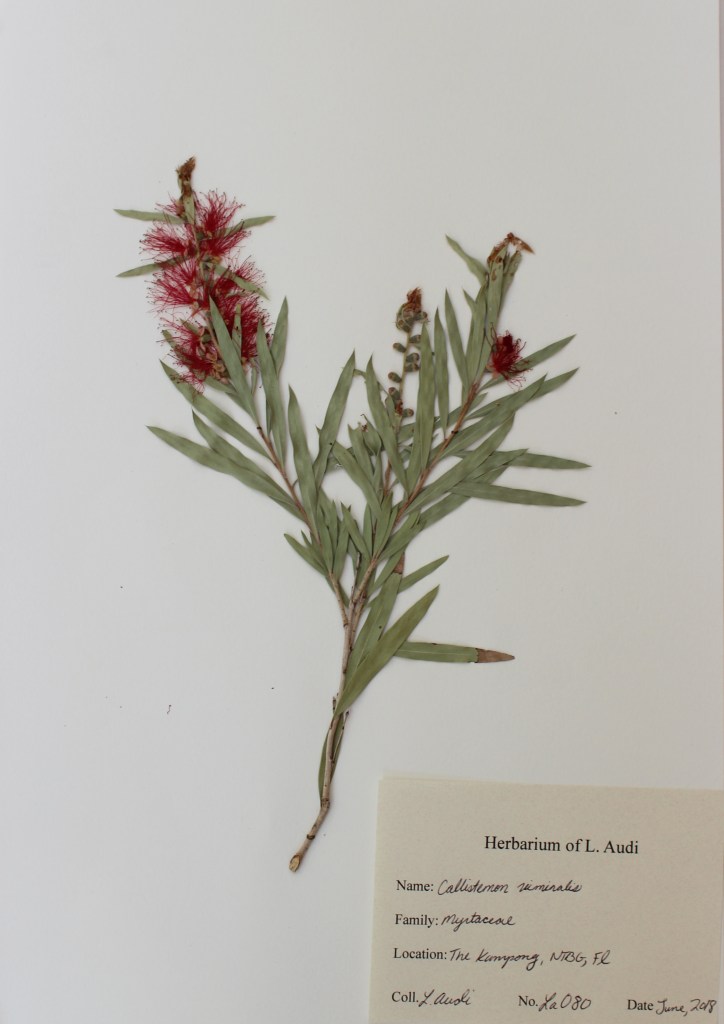
Callistemon viminalis, Myrtaceae (Weeping Bottlebrush)
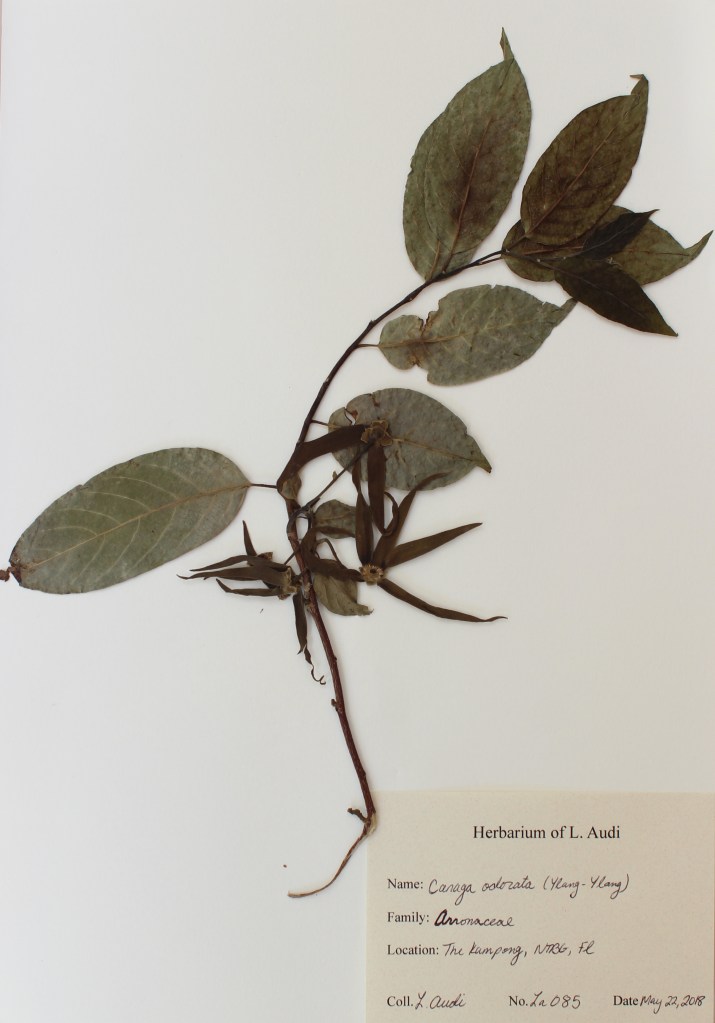
Cananga odorata, Annonaceae (ylang-ylang)
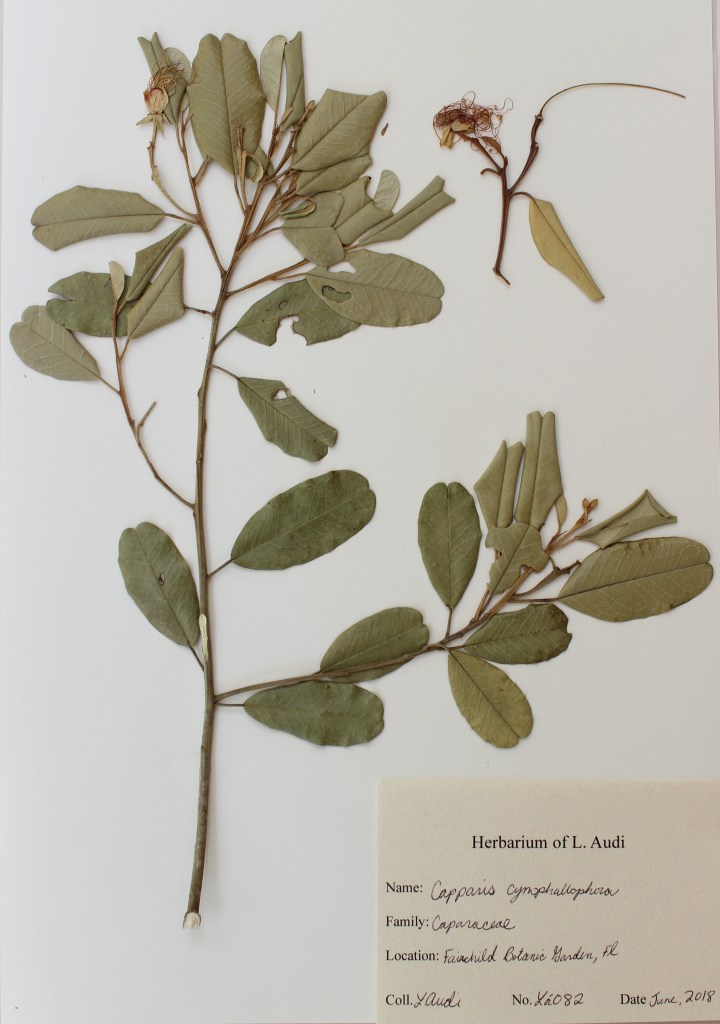
Capparis cynophallophora, Capparaceae (Jamaican Caper)
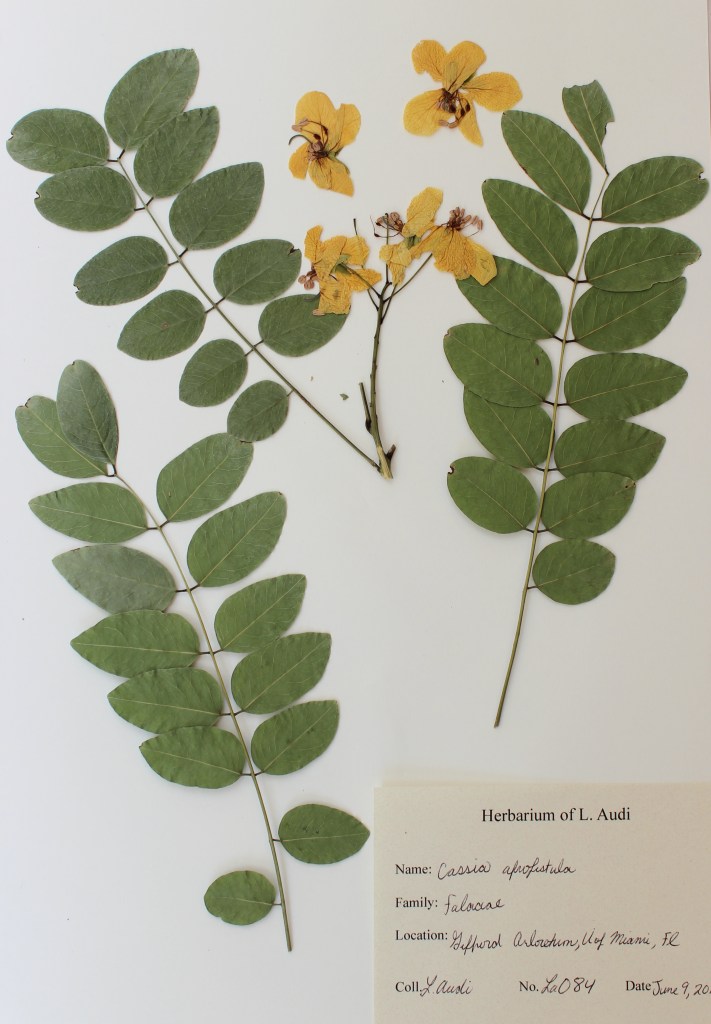
Cassia afrofistula, Fabaceae (Kenyan Shower)


Dorstenia elata, Moraceae
Garcia nutans, Euphorbiaceae
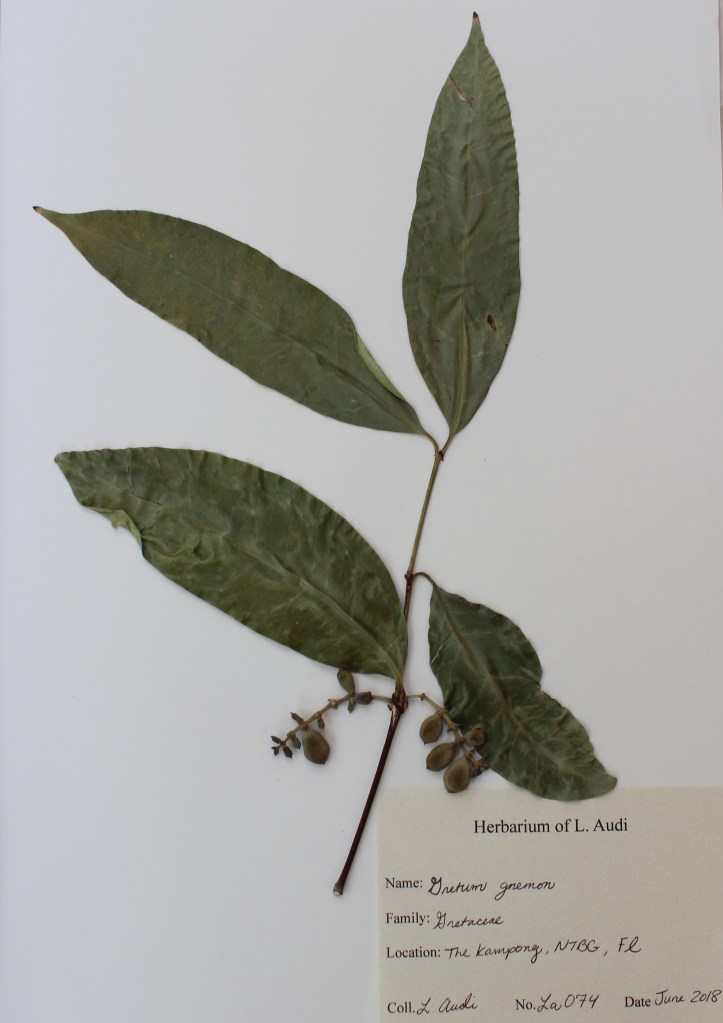

Gnetum gnemon, Gnetaceae
Hibiscus schizopetalus, Malvaceae (Fringed rosemallow)
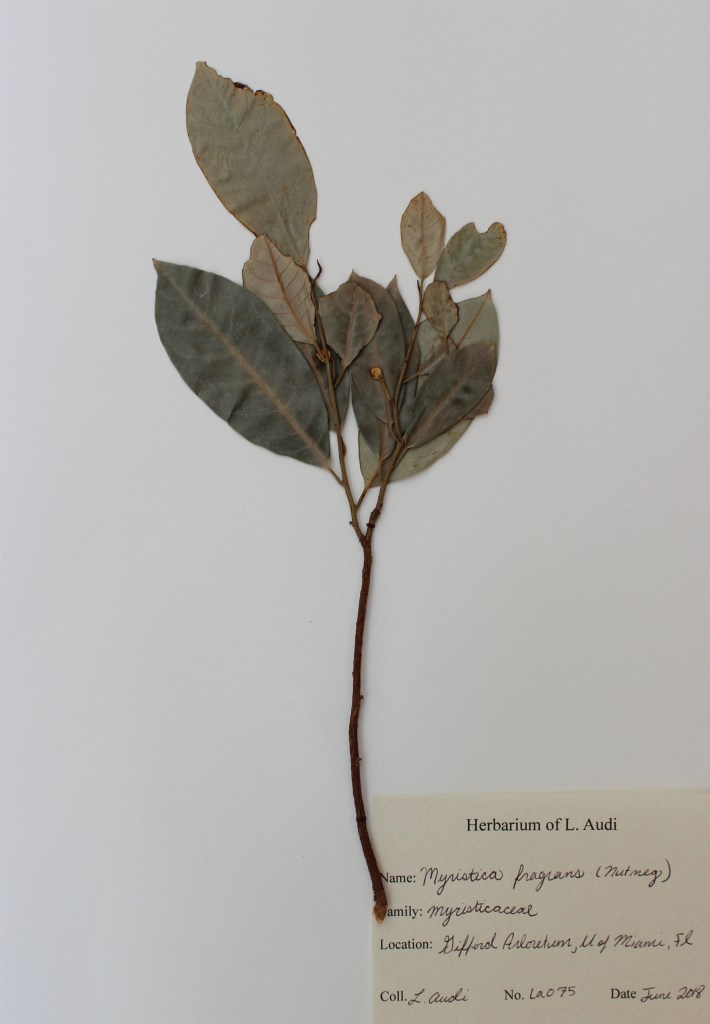
Myristica fragrans, Myristicaceae (Nutmeg)
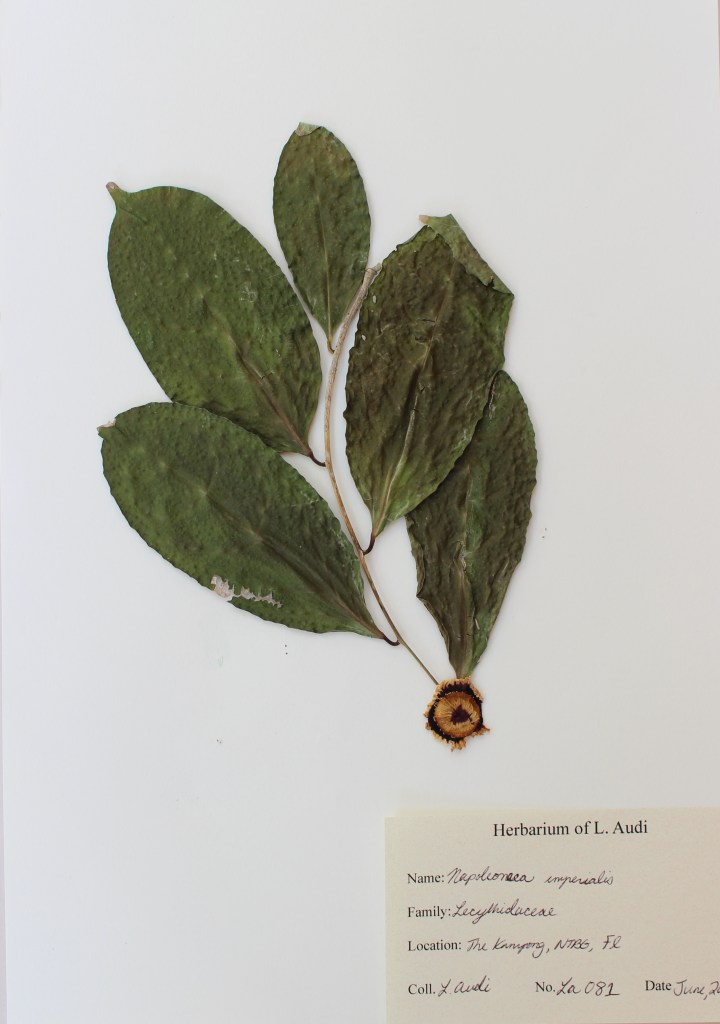
Napoleonaea imperialis, Lecythidaceae
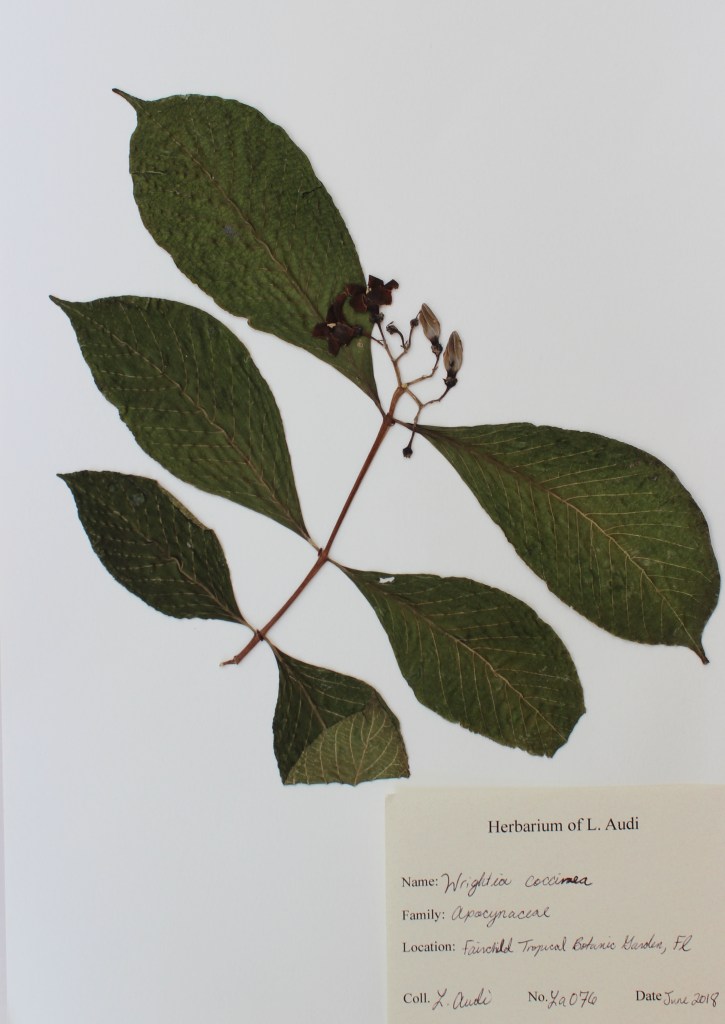
Wrightia coccinea, Apocynaceae
 Lauren Audi | Chlorosoma
Leave a comment